

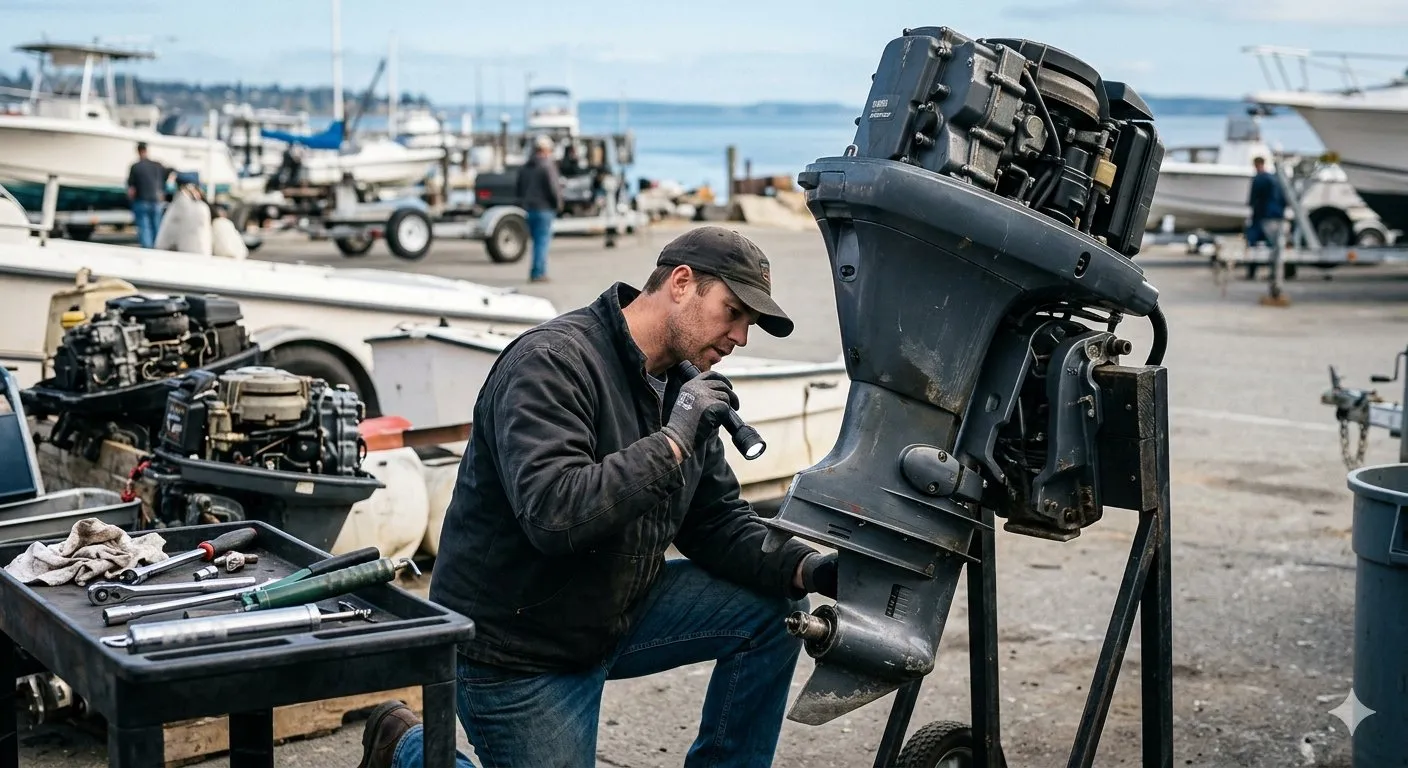
A pre-owned engine can be a fantastic bargain or an expensive headache, and the difference often comes down to inspection. Before handing over cash for a used Mercury outboard, follow this walkaround. It takes about an hour, requires only a few simple items, and can save you from a very costly mistake.
Prepare Before You Arrive
Ask the seller for the model, year, serial number, and hours before you travel. Check these details against what the manufacturer lists, and confirm that the specifications match your boat’s requirements.
Bring a flashlight, rags, a basic tool kit, and a friend with a second opinion. Looking calm and organized also signals that you are a serious, informed buyer who will notice small details. Preparation is half the battle in any negotiation. It also helps to look through outboard motors for sale beforehand, so you already know what comparable engines cost when new.
Begin With a Cold Start
Insist on seeing the engine start from cold. A motor that has been warmed up beforehand can hide hard-starting issues, worn components, or fuel delivery problems. A healthy engine should fire within a few attempts.
Listen carefully as it idles. Rough running, knocking, ticking, or uneven revs deserve questions. Watch for excessive smoke, which can indicate worn rings, poor mixture, or other internal trouble. Never accept the excuse that it only needs a tune-up without proof.
Check the Cooling Stream
Run the engine with a proper water supply and look for a strong, steady stream from the telltale outlet. The water should feel warm, not scalding, and the flow should remain consistent throughout. Bring a bucket or hose adapter if the seller has no test tank. Do not hurry through this stage, since cooling problems rarely fix themselves.
A weak or sputtering stream points to a failing impeller or blocked passages. Neither is impossible to fix, but the repair cost should be reflected in the price you negotiate with the seller.
Inspect the Lower Unit Carefully
Examine the propeller shaft for bent areas and fishing line. Check the seals for leaks. Drain a little gear oil, and look closely: milky or metallic-looking lubricant suggests water intrusion or internal wear. Take your time, and do not let a friendly seller rush you.
Spin the propeller by hand and feel for roughness or excessive play. A smooth, firm feel is reassuring. Any grinding sensation signals bearing or gear problems that could prove expensive to correct. A few dollars of fresh oil can reveal a lot about internal health.
Look Over the Exterior and Wiring
Study the cowling, mounting bracket, and clamps for cracks, dents, or heavy corrosion. A neat, well-cared-for exterior usually hints at an owner who also took care of the mechanical parts. Mismatched paint on small parts may hint at past repairs or replacements.
Check the wiring harness for repairs, mismatched connectors, or brittle insulation. Amateur electrical fixes can lead to unpredictable faults. Tidy, factory-style wiring is a very good sign. A tidy owner usually keeps a tidy engine.
Ask Direct Questions
Why is the seller parting with the engine? Where was it used and stored? When was it last serviced, and are the records available? Honest owners answer comfortably and willingly.
Be cautious about vague responses or reluctance to allow a test run. A seller with nothing to hide welcomes scrutiny. Trust your instincts if the story does not fit with the engine’s condition. Silence on key details is itself an answer.
Check Compression and Fuel Delivery
If you are comfortable with tools, a compression test reveals the health of the cylinders. Even readings across all cylinders are a good sign. A single low number suggests trouble such as worn rings or valve issues. Write down your findings so you can compare more than one engine fairly.
Inspect the fuel lines, primer bulb, and filter as well. Cracked, sticky, or swollen hoses need replacing. Fuel system parts are cheap, but ignoring them can cause poor running and, in rare cases, dangerous leaks.
Conclusion
Before agreeing to any figure, review current prices for new engines to see what they cost. If the savings on a used model are small, the warranty of a new one may be the smarter choice.
Use any flaws you discovered as respectful bargaining points. Calm, factual negotiation works better than pressure. And remember: walking away is always an option when the numbers do not feel right.